
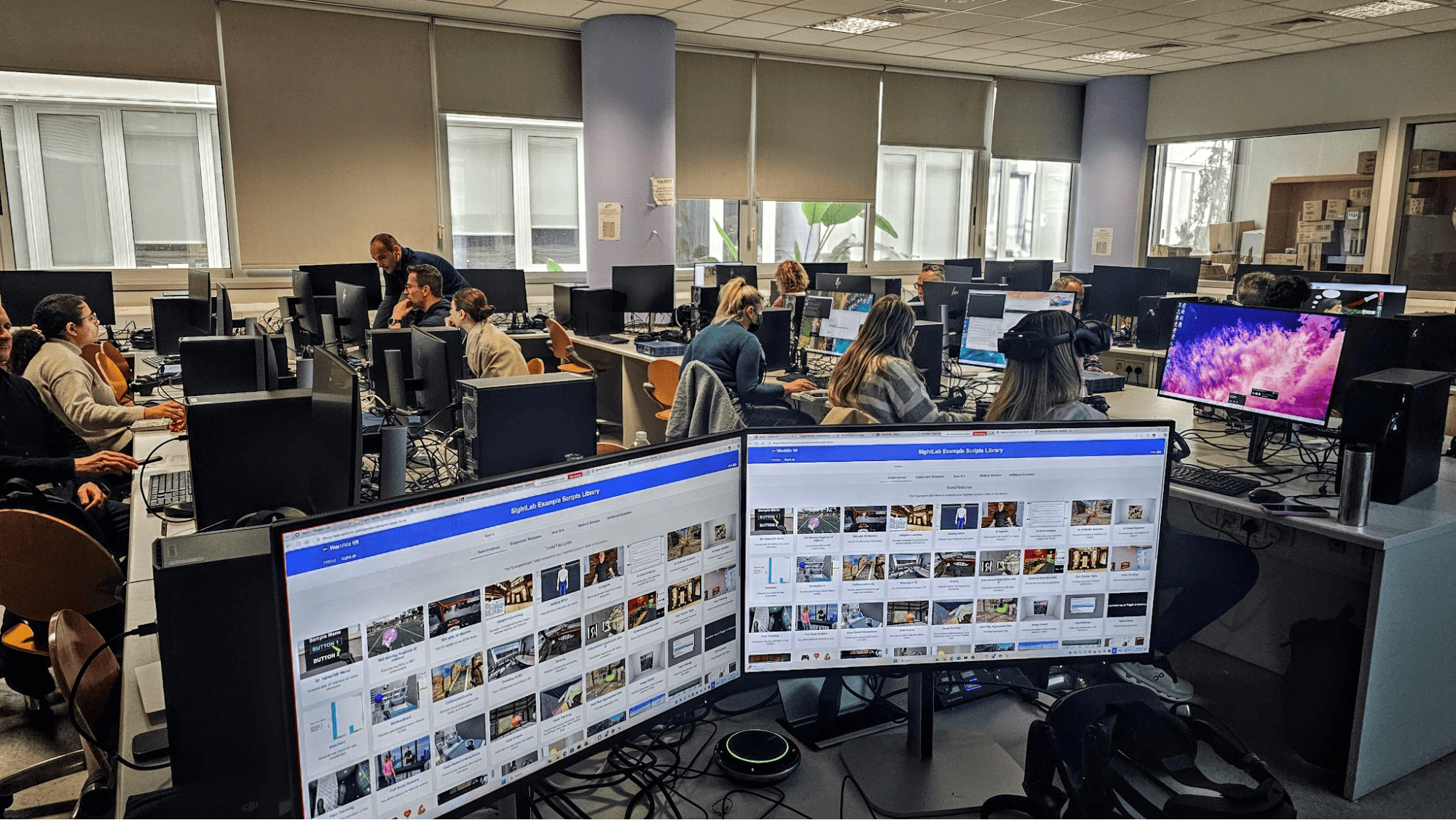
A 40-User Multi-Modal VR Lab Powered by WorldViz Software and Hardware
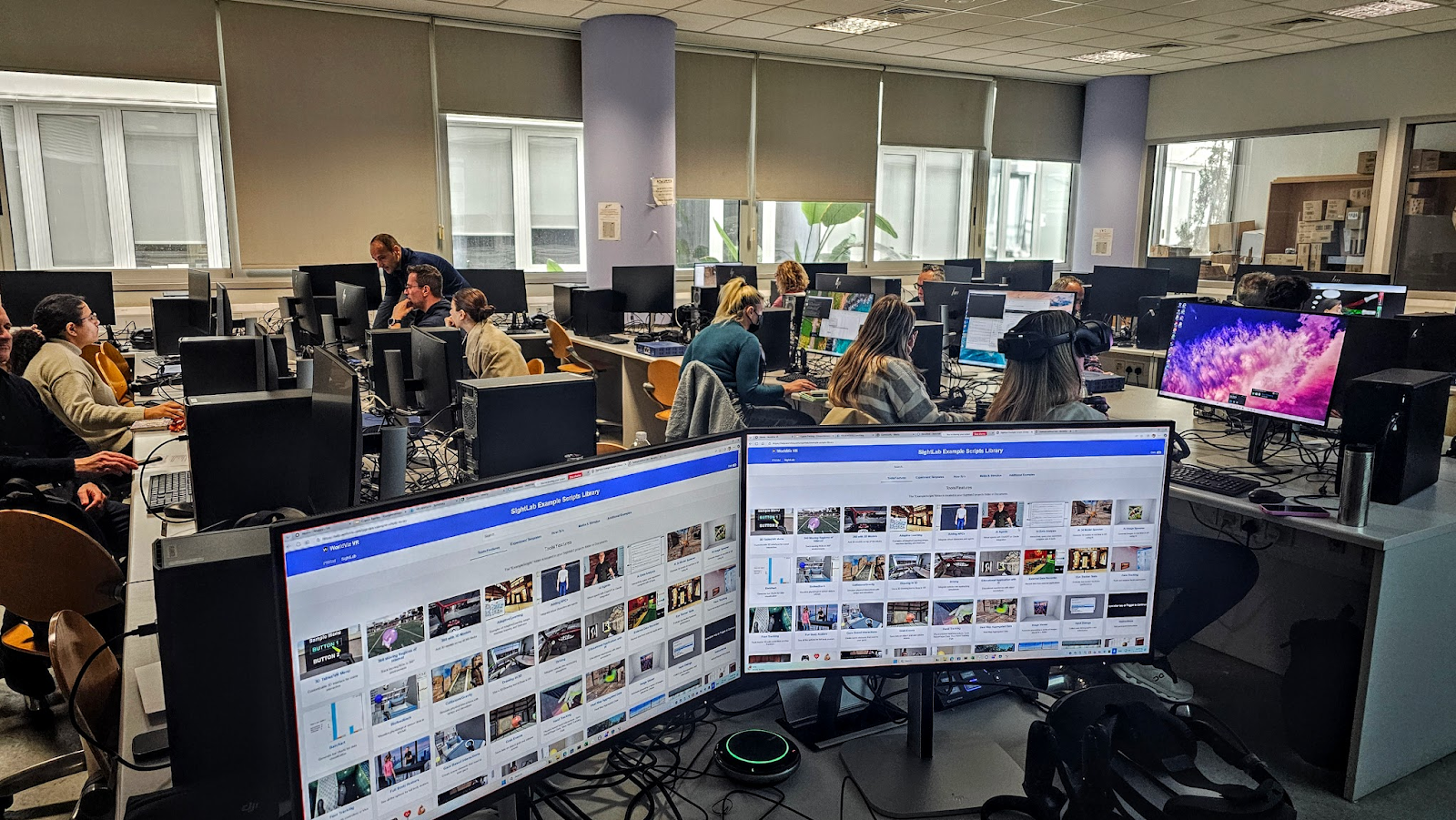
The University of Cyprus has established one of the region’s most advanced immersive research and learning environments: a 40-user virtual reality laboratory integrating multi-user collaboration, neurological and physiological sensing, full-body tracking, and AI-assisted instruction.
The project was an initiative of the Faculty of Social Sciences and Education. The academics responsible were Kostas Fanti, Zacharias Zacharia, Philemon Bantimaroudis, and Antonis Ellinas. Technological implementation was led and supported by Petros Louca of the Information Technology Infrastructure Service.
Built on WorldViz SightLab and the E-Learning Lab, the lab combines cutting-edge hardware - including Vive Focus Vision headsets, Mocopi full-body tracking, BIOPAC physiological monitoring, and MedelOpt fNIRS neuroimaging systems - to create a unified ecosystem for immersive education and multimodal research.
This integrated infrastructure supports both large-scale classroom instruction and high-resolution behavioral research in a shared virtual space.
At the heart of the deployment is a 40-user multi-user VR lab, enabling:
Using SightLab’s multi-user capabilities, students and researchers can occupy the same virtual environment while instructors maintain full orchestration control - freezing movement, guiding attention, synchronizing transitions, and initiating interactive tasks.
The system supports both structured lessons via the E-Learning Lab and custom experimental designs built directly within SightLab.
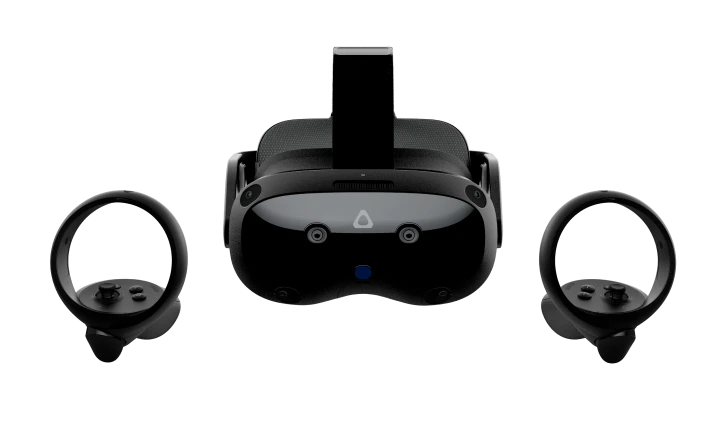
The University of Cyprus selected HTC Vive Focus Vision headsets for their ability to support large-scale deployment while maintaining research-grade tracking fidelity.
In this multi-user research setting, the headsets demonstrated strong performance across several dimensions:
The reliability and tracking fidelity of the Vive Focus Vision headsets enabled simultaneous deployment across 40 users without compromising data integrity - an essential requirement for behavioral and neurophysiological research.
To extend embodiment and movement analysis, the lab integrates Sony Mocopi full-body tracking systems.
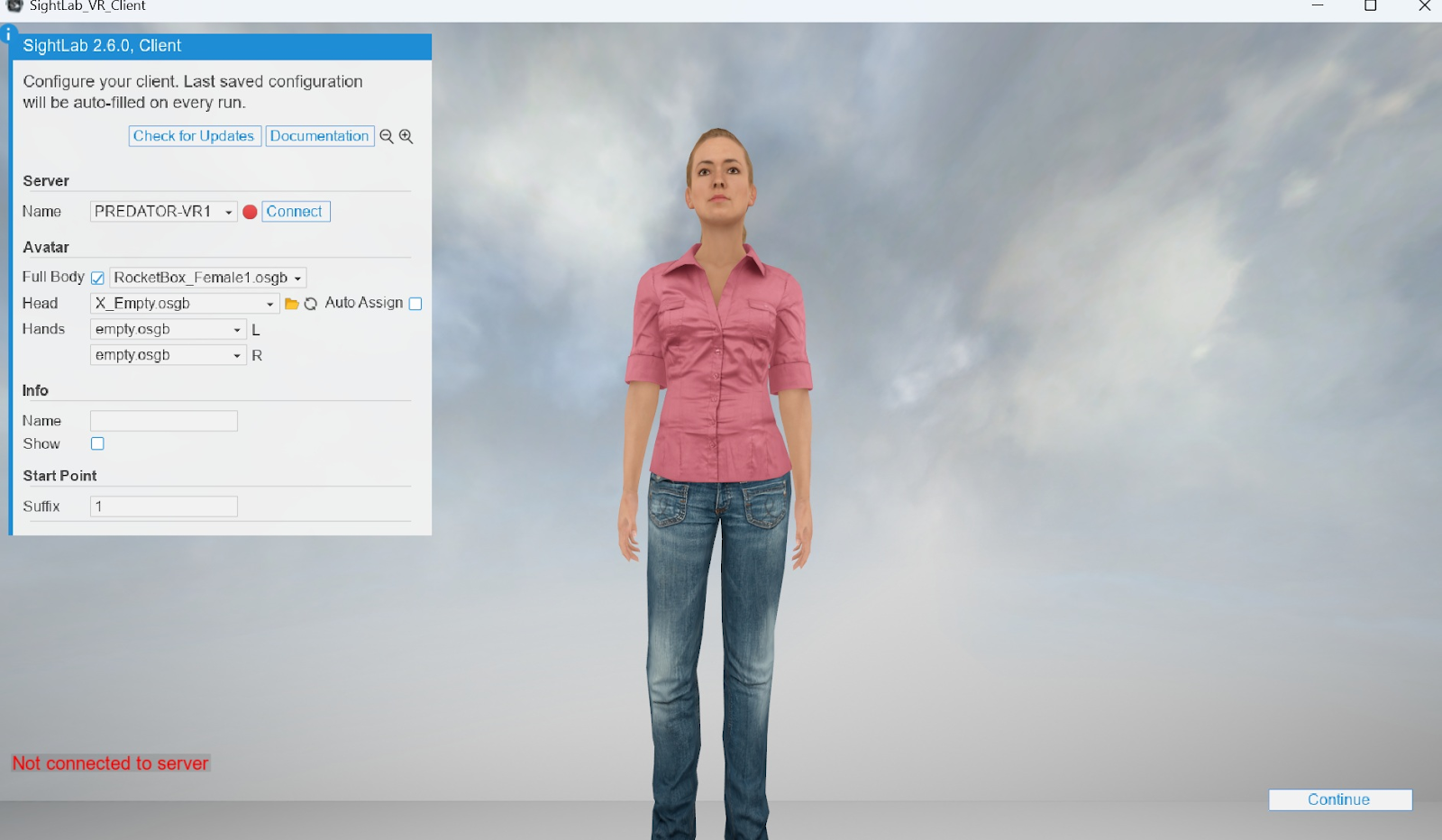
This allows:
Instructors and researchers can observe full-body movement patterns within SightLab’s replay system, enabling deeper behavioral insight beyond head and hand tracking.
The University of Cyprus lab moves beyond visual tracking by incorporating synchronized physiological measurement tools.
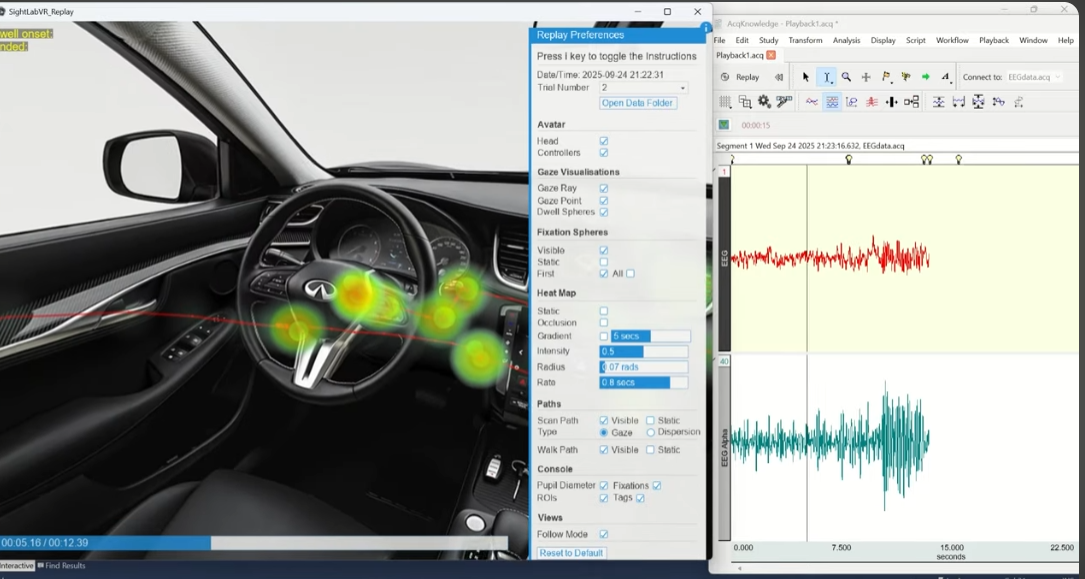
SightLab integrates directly with BIOPAC AcqKnowledge, enabling:
Select Vive Focus Vision headsets are paired with MedelOpt fNIRS systems, allowing researchers to monitor cortical activation patterns during immersive tasks.
This combination enables:
By combining immersive VR with physiological and neuroimaging tools, the lab supports advanced interdisciplinary research across psychology, neuroscience, education, and human factors.
Both SightLab and the E-Learning Lab integrate AI agents capable of operating in multiple languages—including English and Greek.
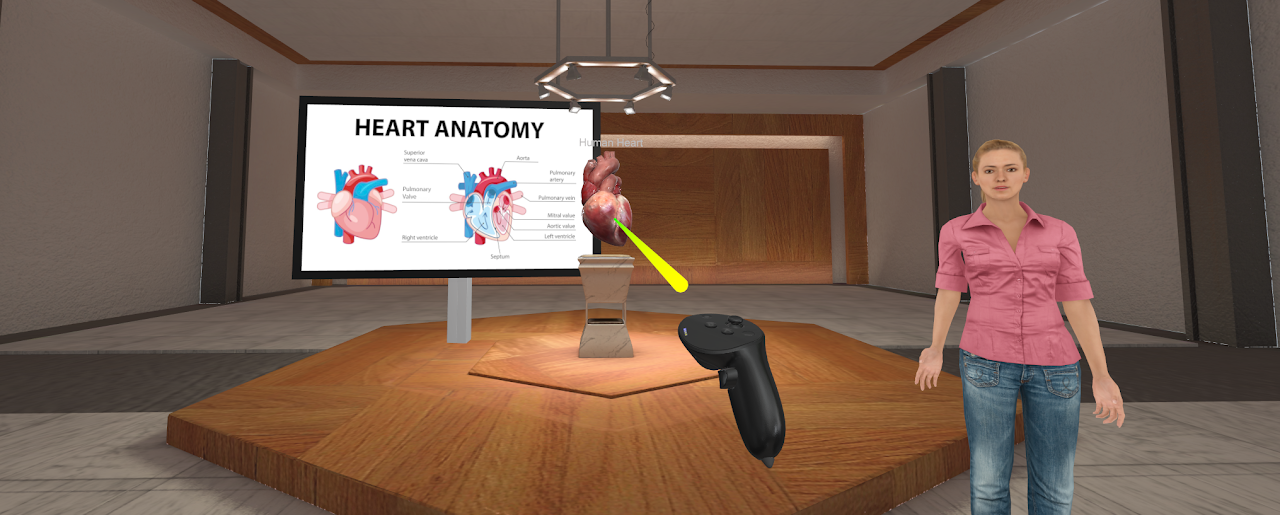
In classroom and research contexts, AI agents can:
This multilingual capability supports:
AI agents can function independently, alongside instructors, or as experimental variables in research studies.
The E-Learning Lab enables faculty to create immersive lessons without programming.
Instructors can:
For anatomy courses, for example, students can:
The system supports both immersive VR and augmented reality workflows, extending instructional flexibility.
While the E-Learning Lab powers structured teaching, SightLab provides a flexible framework for experimental design.
Researchers can:
The replay capability allows investigators to observe exactly what a participant saw, did, and experienced - alongside synchronized physiological data streams.
With 40 users operating simultaneously, instructor control becomes critical.
SightLab enables:
These controls ensure that immersive instruction remains structured and manageable even at scale.
The University of Cyprus deployment demonstrates what is possible when immersive learning, multi-user collaboration, AI tutoring, physiological sensing, and full-body tracking operate within a single coordinated platform.
By combining:
The university has created a next-generation immersive laboratory that supports both large-scale education and cutting-edge research.
This 40-user VR lab at the University of Cyprus represents more than a classroom upgrade - it is a comprehensive research and instructional ecosystem.
Students benefit from interactive, embodied, AI-supported learning experiences. Researchers gain synchronized behavioral, physiological, and neural data streams. Instructors retain full control over lesson flow and experimental design.
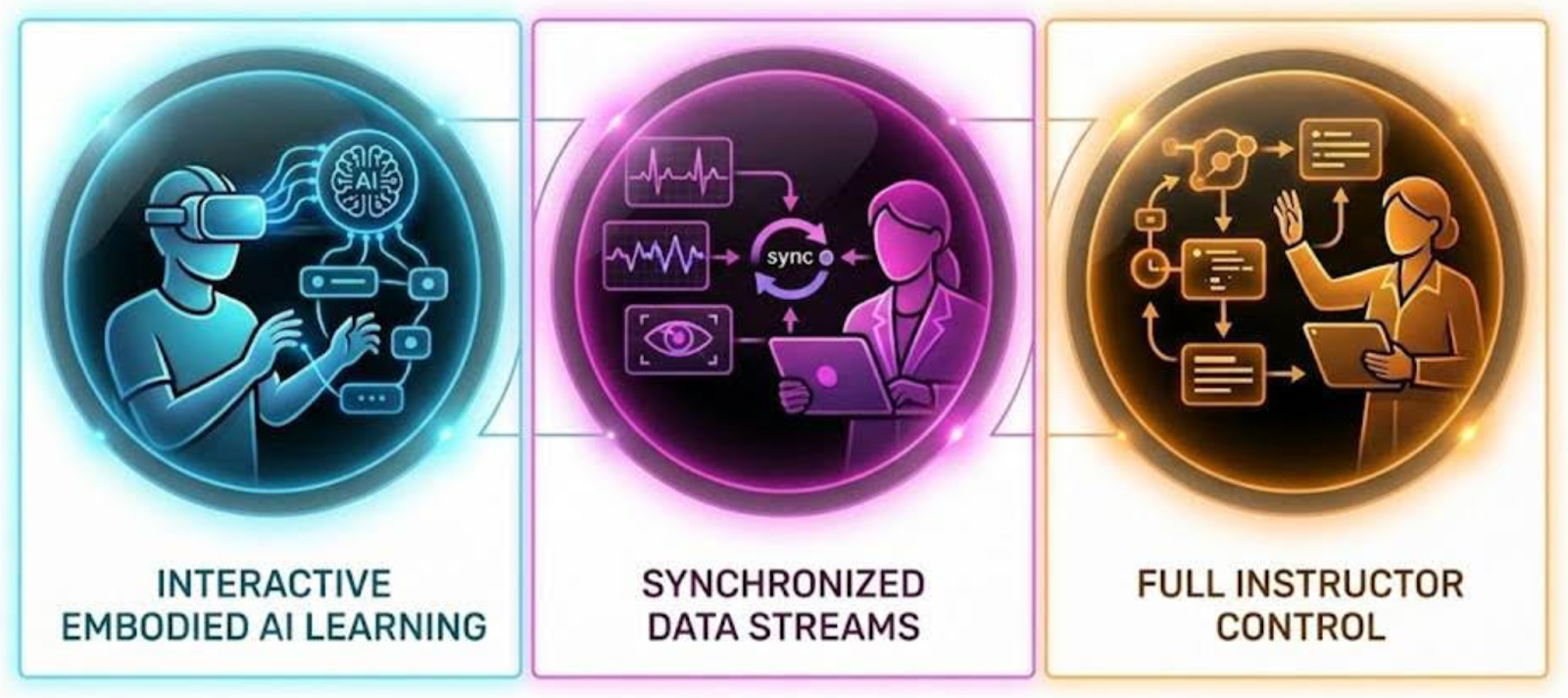
Together, these systems demonstrate how immersive technology can bridge teaching and research within a unified platform.
To learn more about how you can deploy immersive research and learning at your institution, please contact us at sales@worldviz.com.